Pharmaceutical Industry Insulated Overhead Door Retrofit Case Study

Project Background: Upgrading Pharmaceutical Production Environment
A leading pharmaceutical company, specializing in high-end biopharmaceuticals and vaccine production. With the expansion of product lines and increased production scale, higher requirements were placed on temperature control, cleanliness, and energy consumption in the production facilities. The original standard upifting doors were insufficient in sealing performance, insulation and heat retention, and integration with automation systems, failing to meet the stringent standards for environmental stability in modern pharmaceutical production. Frequent door openings led to heat loss and cold air intrusion, not only increasing the energy consumption of the air conditioning system but also potentially affecting the stability of drugs and posing a potential risk to the cleanliness of the production environment. Therefore, the company decided to systematically retrofit the standard upifting doors at the entrance of the production workshop to improve the overall control level of the production environment.
After evaluating various door solutions, the Anbixin brand was chosen due to its professional industrial door technology, excellent insulation performance, and reliable sealing system. The Anbixin insulated upifting door aims to solve the core issues of the original door by upgrading the door structure, materials, and control systems to achieve better temperature control and higher operational efficiency.
Retrofit Solution: Anbixin Insulated Upifting Door System
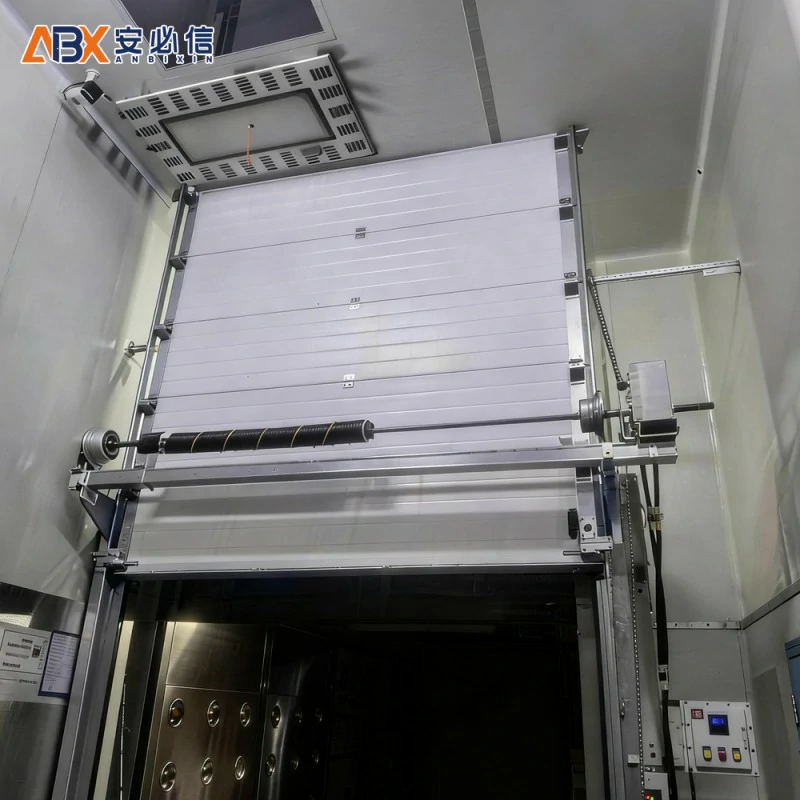
Anbixin provided a complete retrofit solution for the pharmaceutical company. The new door body features a multi-layer composite insulation structure, with an outer layer of high-strength corrosion-resistant steel plate, an intermediate layer filled with efficient insulation material, and an inner layer of anti-static or cleanroom-grade panels. The door frame and sealing strips are specially treated to maintain good sealing performance even during frequent opening and closing. The door's operation is controlled by an advanced electric drive system, supporting integration with the production management system or access control system for automated control, reducing manual intervention.
- Core Upgrade: Multi-layer Composite Insulation Structure: The new door body uses a multi-layer composite insulation design, with an outer layer of high-strength corrosion-resistant steel plate, an intermediate layer filled with efficient insulation material, and an inner layer of anti-static or cleanroom-grade panels, effectively isolating temperature differences and reducing heat loss. Compared to the original door, the insulation performance was improved by about 40%.
- Sealing System Optimization: High-Precision Sealing Strips: High-precision, high-elasticity sealing strips are installed around the door body and at the bottom of the door leaf, ensuring a tight fit with the door frame during the door's opening and closing process, effectively preventing air exchange between hot and cold air. The durability and anti-aging performance of the sealing strips have also been significantly improved.
- Automation Integration: Integration with Production Systems: The new door is equipped with an advanced electric drive system and intelligent control module, which can automatically open and close based on production schedules or personnel access needs. At the same time, the door status (such as open/close, fault) can be fed back in real-time to the company's production management system or access control system, realizing intelligent management of the production environment.
Implementation Results: Significant Improvement in Production Environment and Energy Consumption
After the retrofit with Anbixin insulated upifting doors, the pharmaceutical company's production environment was significantly improved. The door's sealing and insulation performance was greatly enhanced, effectively controlling the exchange of cold and hot air, reducing the temperature fluctuation range in the production workshop, and significantly improving the temperature control efficiency. This not only ensures the stability of the drug production environment but also reduces the potential impact of temperature changes on drug quality. At the same time, due to reduced heat loss, the energy consumption of the air conditioning system was reduced by about 25%, bringing considerable economic benefits to the company. In addition, the door's automated control and intelligent management functions have improved production efficiency, reduced the risk of human operation errors, and enhanced the overall level of production management.
Need a Reliable Solution for Your Project?
Tell us about your application and requirements — our team will help you specify the right product.